
Signs
The universe gave me a sign last week. How to make work from it?

[Content warning: contains brief references to sexual violence and torture - not mine, thank goodness]
You don’t get to choose when the universe tells you something important. That’s the point: the signal disregards the timing. You learn something not when it is convenient, but when there is no other choice. When you haven’t been listening quite as closely as you might.
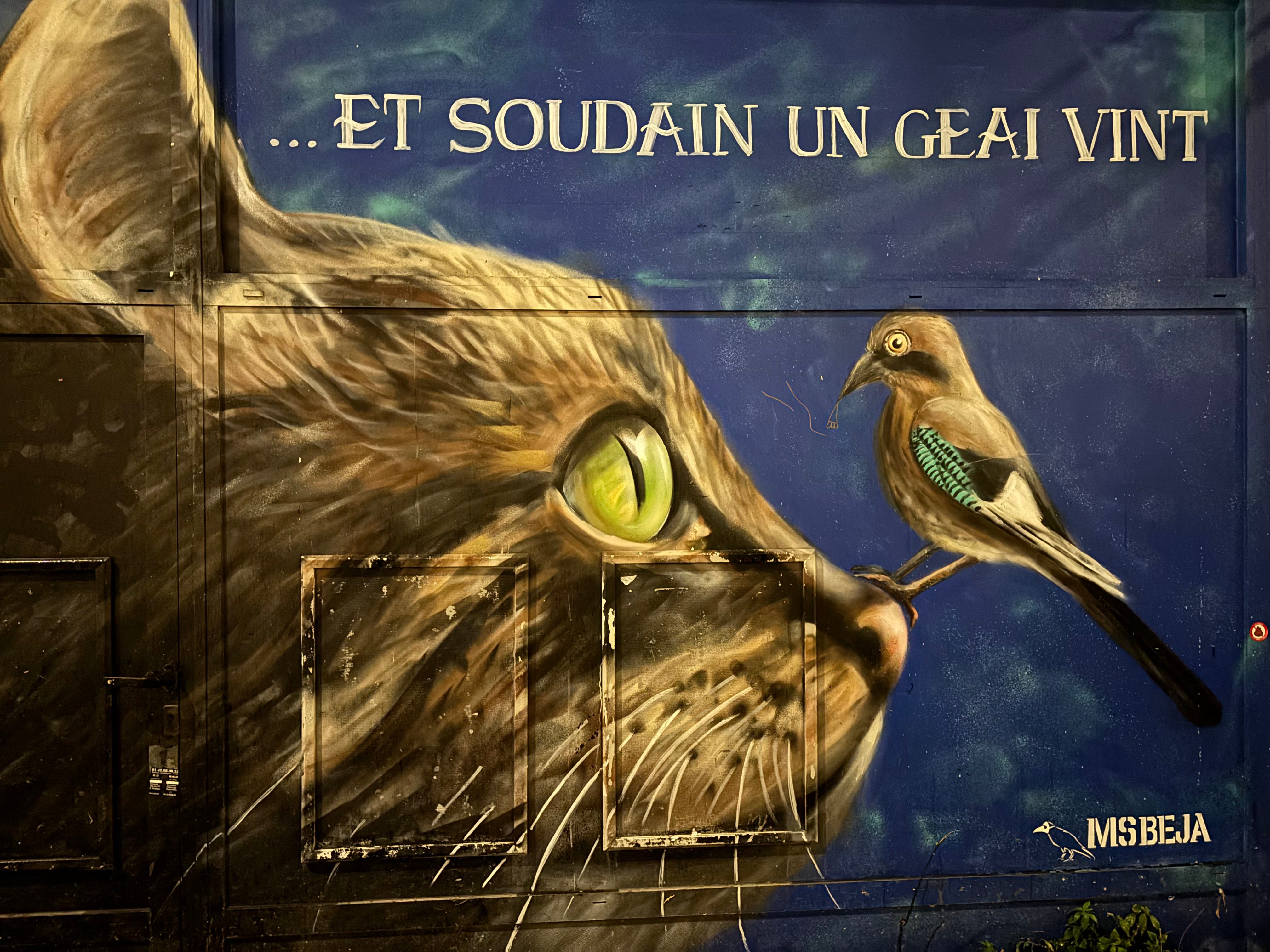
The signal involves my work. I’ve been reading Fliss Aldwell’s new Substack, The Slow Revolt, and thinking more about my refusal to surrender to the needs of my body mind. More than that: my refusal to acknowledge that ceaseless striving does not serve me. That work as I define it does not serve me.
I come from a background where fear of poverty trailed every family conversation. There wasn’t much to go round. What there was went on education: books, music lessons. My maternal grandparents were musicians, and my mother knew the distinct flavour of poverty linked to creative practice. Music was a dead-end: I was encouraged to learn but not to flourish. It was not a career choice. Art was bunk.
By contrast, my father grew up in wealth and hoarded whatever there was, incensed that he was not entitled to more. It’s an embarrassingly patriarchal model. While we had holes in our shoes, he had new Hifi systems. There was no conversation about this. It simply was.
I got a job as soon as I was legally able. I have worked since then, with the only exceptions of the periods – now lengthening – when I have been too unwell to do so. I have worked in garden centres, coffee shops, pubs, bars; I’ve been a banking administrator, an executive assistant, a call centre fundraiser, an au pair, a technical translator, a professional editor. For the most part acceptable jobs with proper names and varying degrees of boredom.
A researcher, a librarian, a teacher of English as a foreign language, a university lecturer, a consultant and trainer, a director of culture and operations, a mentor and coach. But not a writer.
When friends at university talked about going into journalism, I had no idea what they meant. People didn’t do that. People like me couldn’t afford it. It never occurred to me that you might seek a profession that you wanted, rather than one that offered financial stability. Desire was irrelevant. The gulf widened: who were these people I knew who felt emboldened to go out into the world and make joy from their work?
I could only see the money: or the lack of it. Unpaid internships were not an option, not think tanks nor curatorial assistantships nor any profession, really, that demanded unpaid labour upfront as a future investment. My stolid lower-middle class upbringing could not afford risk. Risk meant poverty. There was no safety net. It is hard to take a risk when you have so little. What I have come to learn in time is that those who have nothing at all often take the biggest risks. Change comes from grassroots campaigning; from anguish and grief, and the determination to make things different to how they are. That is in me too.
At corporate careers fairs in my early twenties with free pens, and wide, swooping logos in white and red and grey, and endless brochures, I left each building with a headache and a roiling stomach. I couldn’t find the material of which these jobs were made. What was strategic consultancy? Investment banking? It was incomprehensible to me. It still is. I knew then that my fantasies of financial stability would never outweigh this insatiable hunger for creativity and learning, and the ability to play some small part in the transformation of another person’s soul. That’s my price for work.
What is work? After more than 25 years of it, I still don’t know.
**
The 17th century painter Artemisia Gentileschi knew about signs, and the compulsion to work.
I’ve taught students about Gentileschi, arguably the first figure of modern art because, despite the 200 year rift between her artistic career and the beginnings of the modern art period, the sensibility of her work is about painting and power. Specifically, the power that men exert over women, and the power of women to redirect it.
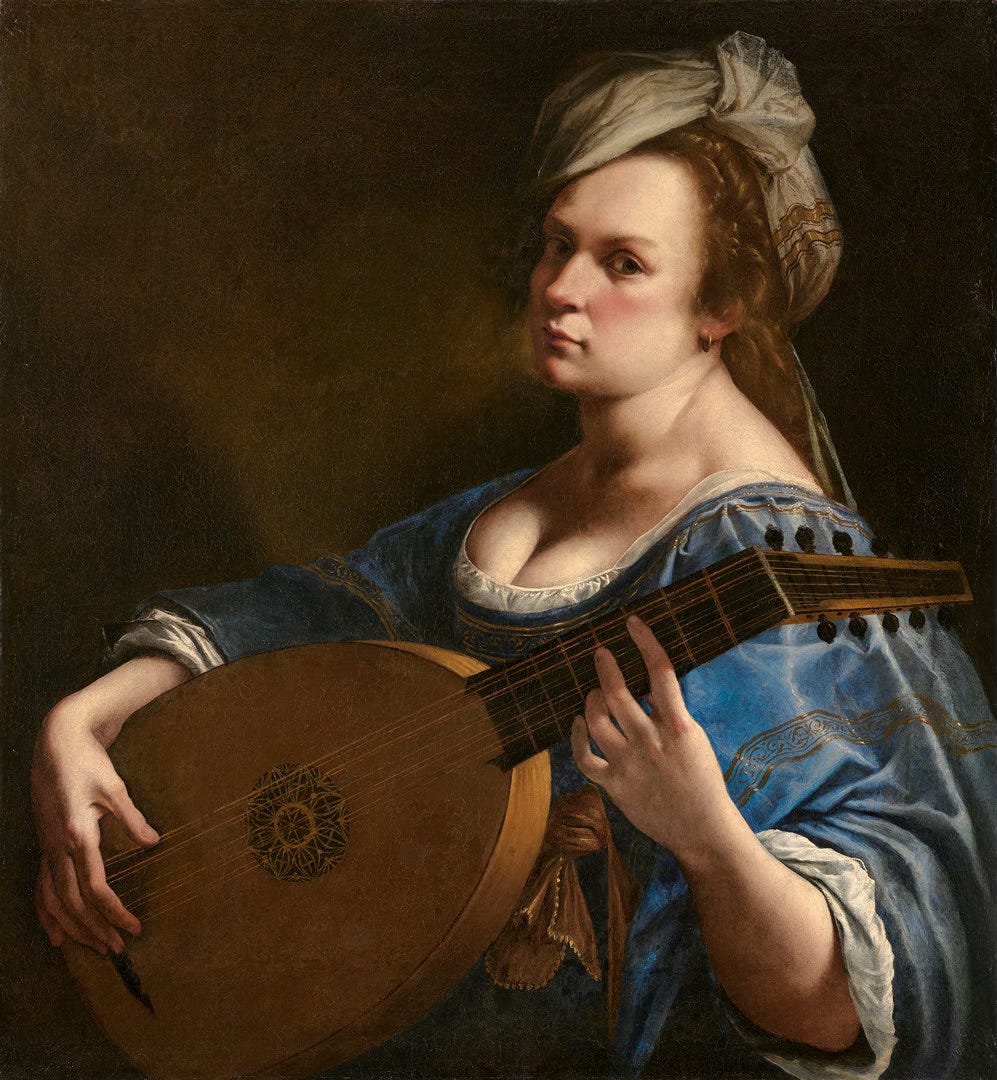
The women in her paintings express emotional truth in their gestures, their direct gazes out of the canvas. And feminist art historians from the 1970s onward like Linda Nochlin, Griselda Pollock and Mieke Bal brought Artemisia back into visibility, thwarting the pretences of fusty white male art historians that there were no good women artists.
From a young age, and mostly confined to her home, Artemisia trained with her painter father Orazio. At 17 she was ‘given over’ to the artist and convicted rapist Agostino Tassi, who was charged with teaching her perspective in landscape. Instead, he raped her and refused to marry her. Artemisia was forced to go to trial at her father’s insistence, not because of the rape, but because her sexual activity without marriage would bring shame on the family name. Publicly, in court, her hands and fingers were tortured to ensure the veracity of her account. The verbatim testimonies of the trial are preserved in the Italian State archives in Rome, and were brought to life by Breach Theatre in 2018 through the verbatim play It’s True It’s True It’s True.
I won’t dwell on the extreme violence of the assault that took place, and the legal system that risked Artemisia’s life, health and livelihood. She not only survived both assault and court case; she became one of the most successful artists of her time. Her commissions in London, Florence, Naples and Rome (where she spent a large portion of her life) enabled her not only to make a living from her work, but to employ a team who worked for her, and to support her family from her income.
At the Musée Jacquemart-André in Paris, amid its mid-19th century second empire excess, Artemisia’s story is somewhat sanitised. The museum’s small series of rooms dedicated to temporary exhibitions currently display 40 of Artemisia’s paintings until 3 August this year. The exhibition emphasises Artemisia’s patriarchal lineage: she is the heir of her father, whose work is indebted to Caravaggio. I understand the desire not to overwhelm her extraordinary body of work with the rape that is the most commonly known fact about her, and which titillated even the ultranationalist right-wing British newspaper The Daily Mail to write about a successful woman artist. And yet, I’m cautious about ignoring the extent to which both act and trial shaped Artemisia’s creative working life.
In one small corner of the exhibition, there is a tiny, sketched portrait of Artemisia in drag by the Dutch artist Leonaert Bramer from 1620.
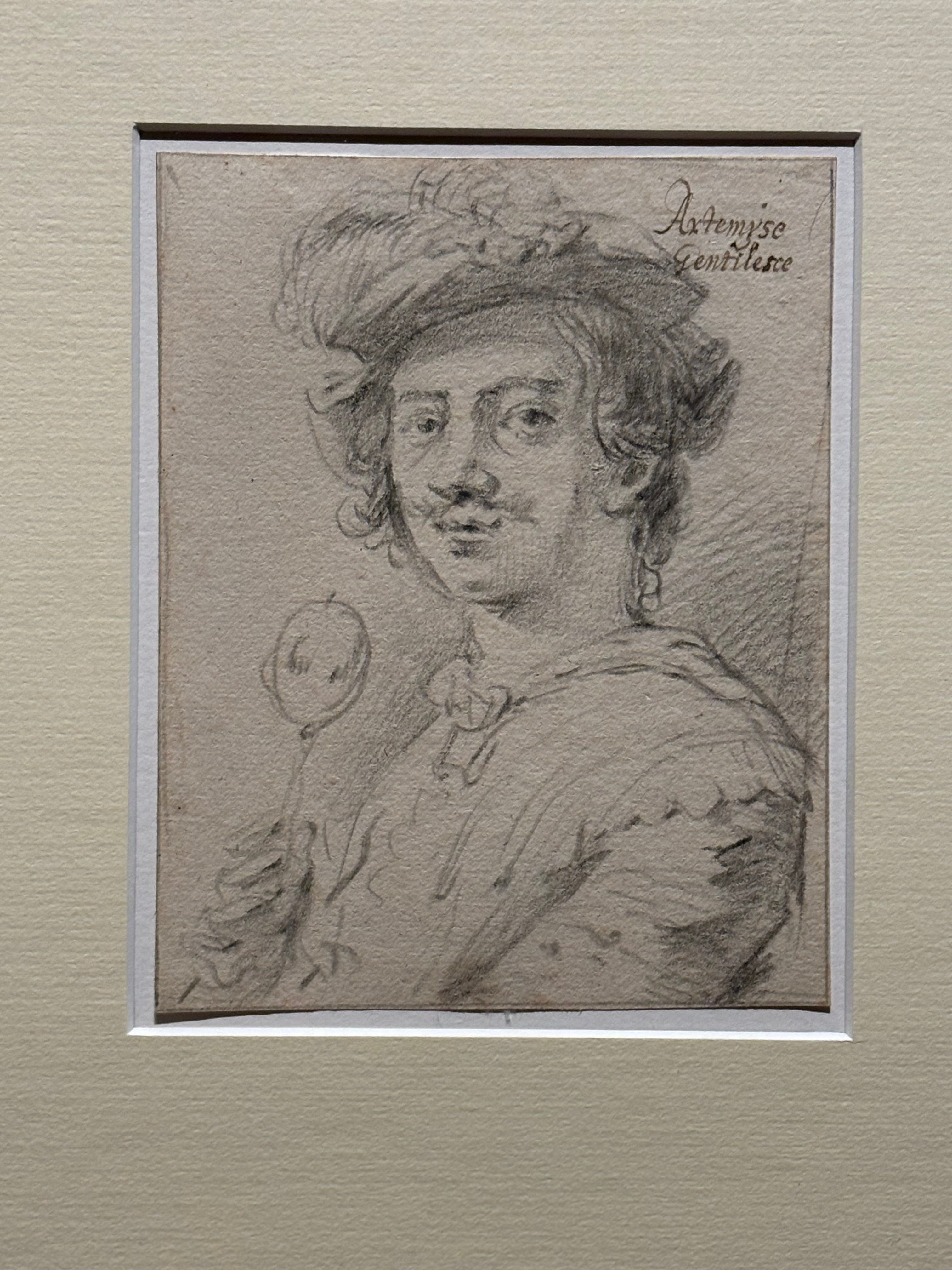
In the sketch, Artemisia sits placidly, implacably in semi-profile, with a feathered cap, short unruly curls, and a spreading, breathy moustache, holding a candied apple. There is tired wisdom in Artemisia’s eyes. Playfulness, resistance. She/they take on masculine energy with soft, tender power. How can I ignore those queer signs that unbind the forces of binary gender? The strength of survival that is also an undoing?
I wonder whether, in the moment of public cruelty that defines so many histories of Artemisia’s art and life, there was a sign of some sort. While Artemisia screamed, “it’s true, it’s true, it’s true,” she knew something about the truth of her own strength.
Pain is a signal.
Pain is not justified. Nonetheless, it drives us forward.
Pain is what compels us to move.
This is a powerful piece Jenny. Thank you for introducing me to Artemisia.